
Rosemary Parmesan Sourdough Bread
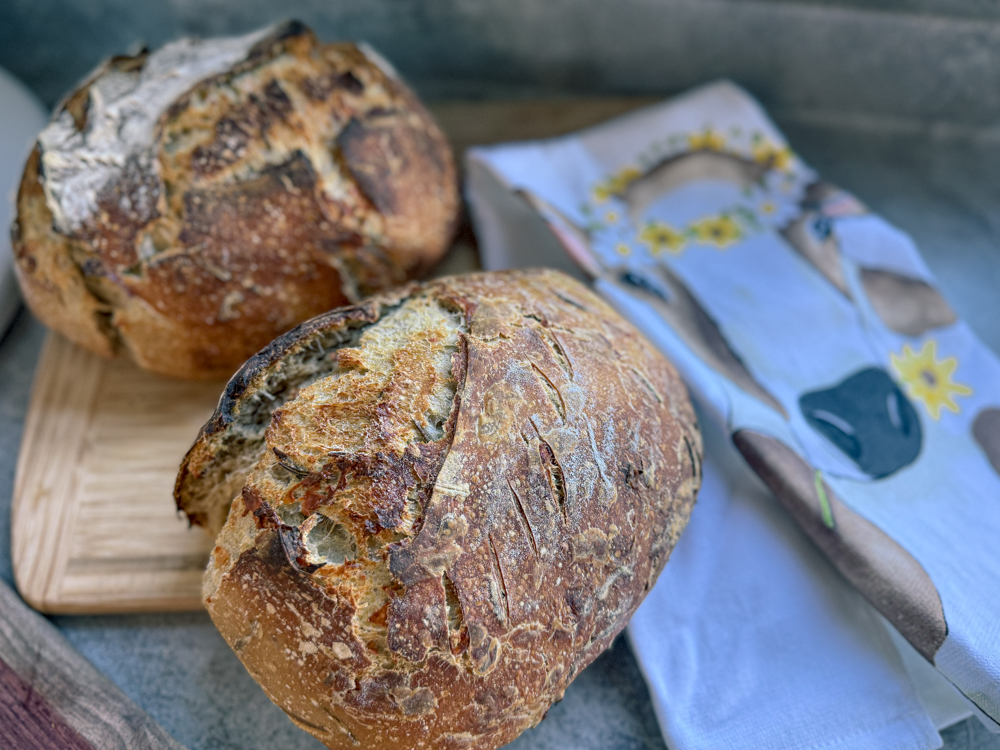
This rosemary parmesan sourdough bread is a rustic, savory loaf that makes your kitchen smell like the coziest bakery around. Studded with fresh rosemary and savory cuts of parmesan, this recipe turns an ordinary day at home into something special.
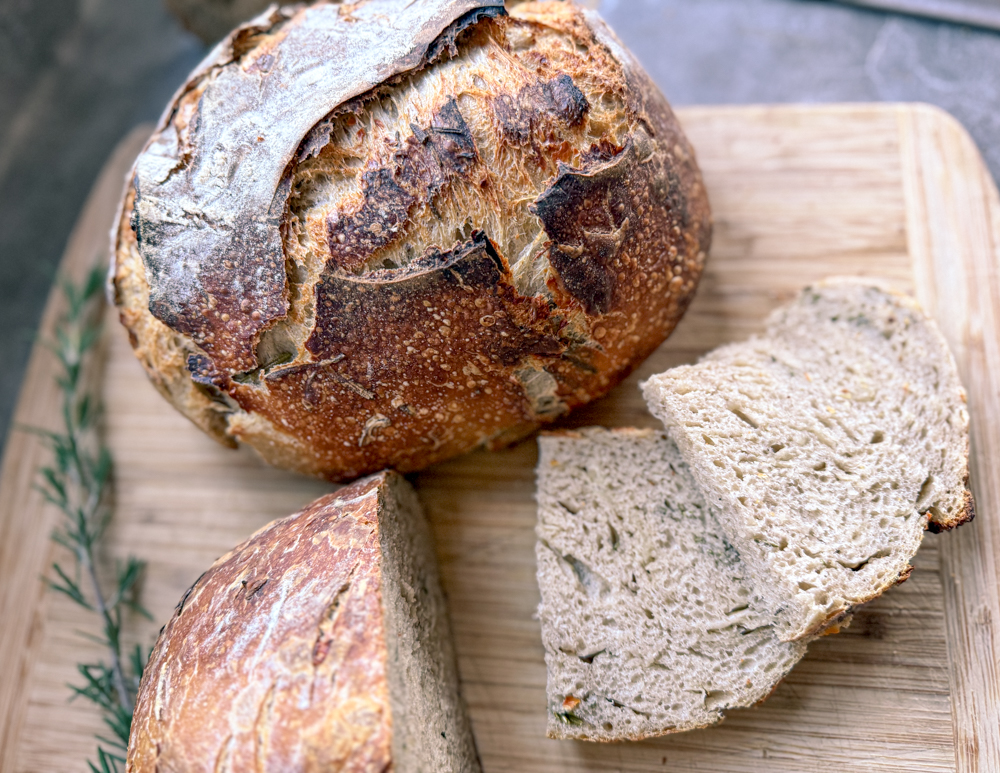
Rosemary parmesan sourdough is savory, cozy, and deeply comforting. If you’ve already mastered basic sourdough, this is the kind of loaf that makes you feel like a real artisan baker.
It’s also the kind of loaf begging to be sliced while it’s still warm.
Warm bread on the counter, the smell of herbs in the air, and that crackly sourdough crust… honestly, there is just something about baking bread with fresh herbs that makes your whole house feel like a storybook.
Why you’ll love this rosemary parmesan sourdough
If you love sourdough that feels a little more “special” than your everyday sandwich loaf, this recipe is for you.
This rosemary parmesan sourdough bread is:
- Crispy and golden on the outside
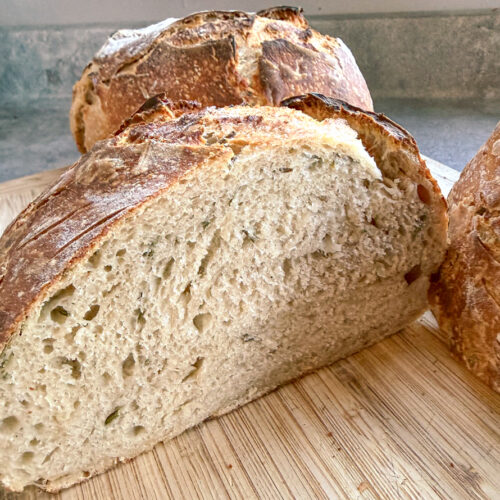
- Soft and chewy on the inside
- Loaded with savory parmesan flavor
- Fragrant with real, fresh rosemary
- Perfect for soups, stews, or olive oil dipping
It’s the kind of loaf you bring to a dinner party, or slice thick and serve with butter alongside a cozy soup or stew.
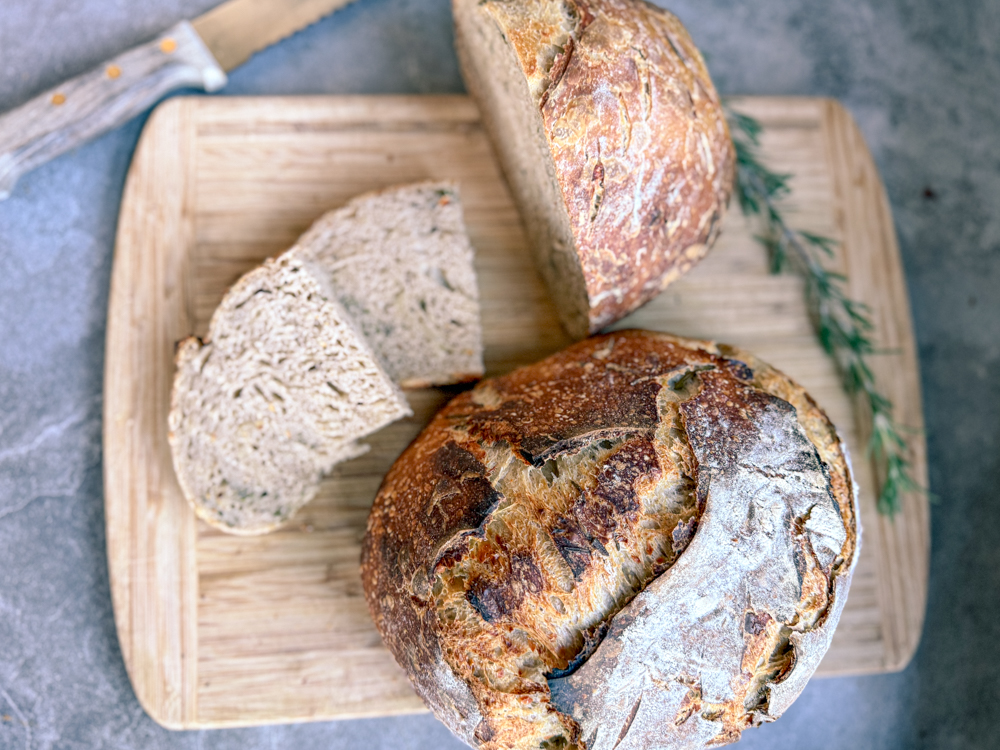
What makes rosemary parmesan sourdough different?
This loaf uses the same beautiful fermentation process as classic sourdough bread, but with two major upgrades:
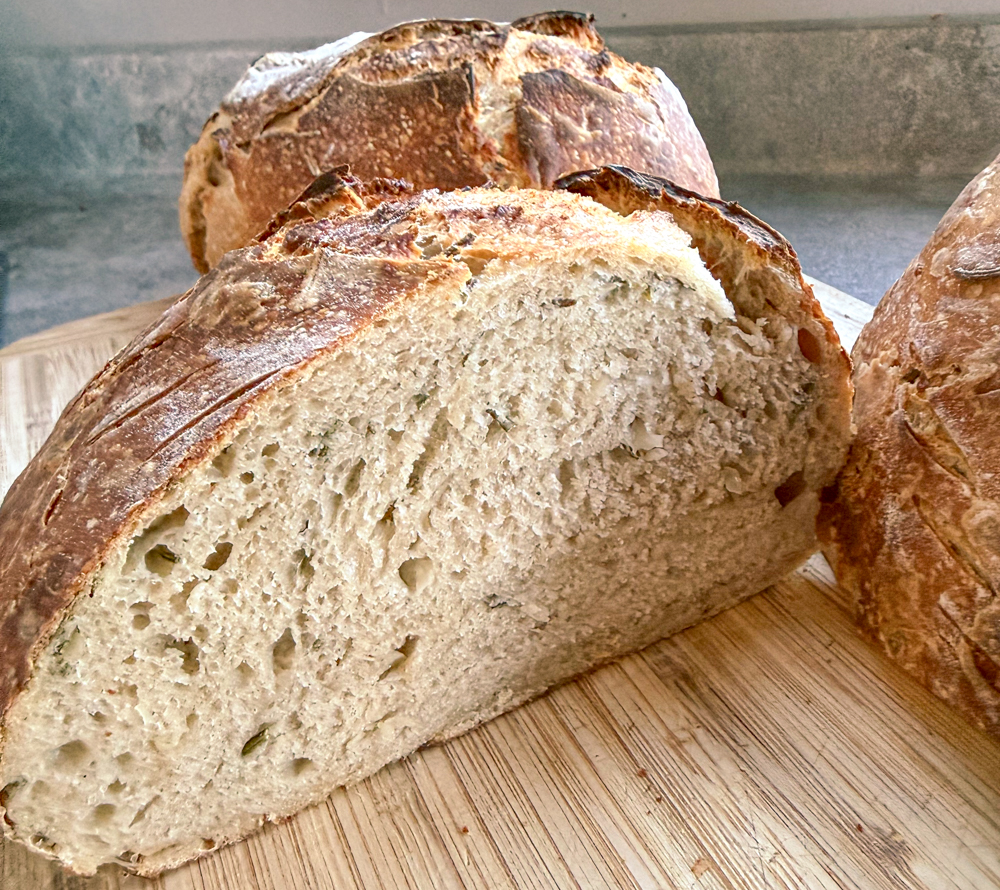
Fresh rosemary brings a warm, earthy flavor that bakes right into the crumb. Shaved parmesan cheese melts into the dough, creating little salty pockets throughout the loaf.
Instead of tasting neutral or mildly tangy, this sourdough has a deep, savory flavor that pairs beautifully with so many dishes. It’s absolutely amazing with a drizzle of olive oil and some Celtic sea salt. It shines next to roasted vegetables and meats. We’ve even enjoyed it at breakfast with some scrambled eggs and bacon.
Ingredients for rosemary parmesan sourdough bread
- A blend of all-purpose flour and bread flour — I like to use a mixture of both types, because it gives the best of both worlds (tenderness from the AP flour and strength and chew from the bread flour).
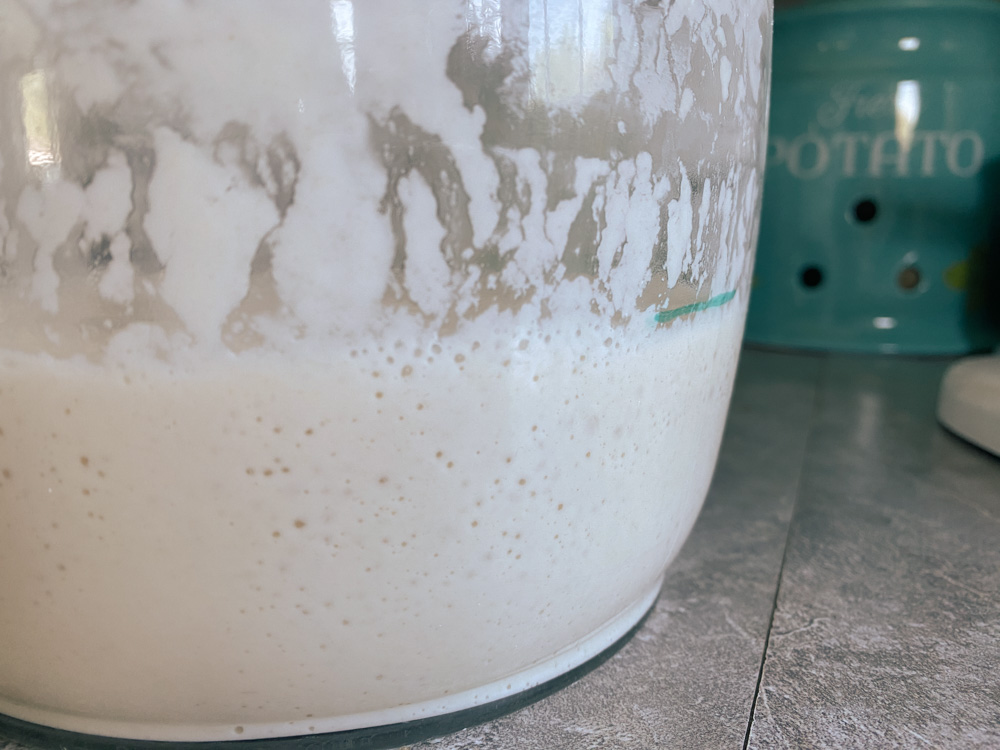
- Healthy, active sourdough starter — A must to give this bread it’s signature tang and rise.
- Fresh rosemary — Fresh is the key here. Dried rosemary won’t give you the same bright, bakery-style aroma.
- Shaved parmesan — I use shaved parmesan because it melts beautifully throughout the dough, giving the bread that signature salty, cheesy flavor without overpowering it.
- Sea salt — You can’t have flavorful bread without it.
How to make rosemary parmesan sourdough bread
This is a slow, peaceful bread. You know, the kind you work on between homeschool lessons, laundry loads, and coffee refills.
It’s made using the same basic process as most artisan sourdough breads — mixing, resting, stretching, fermenting, shaping, and baking.
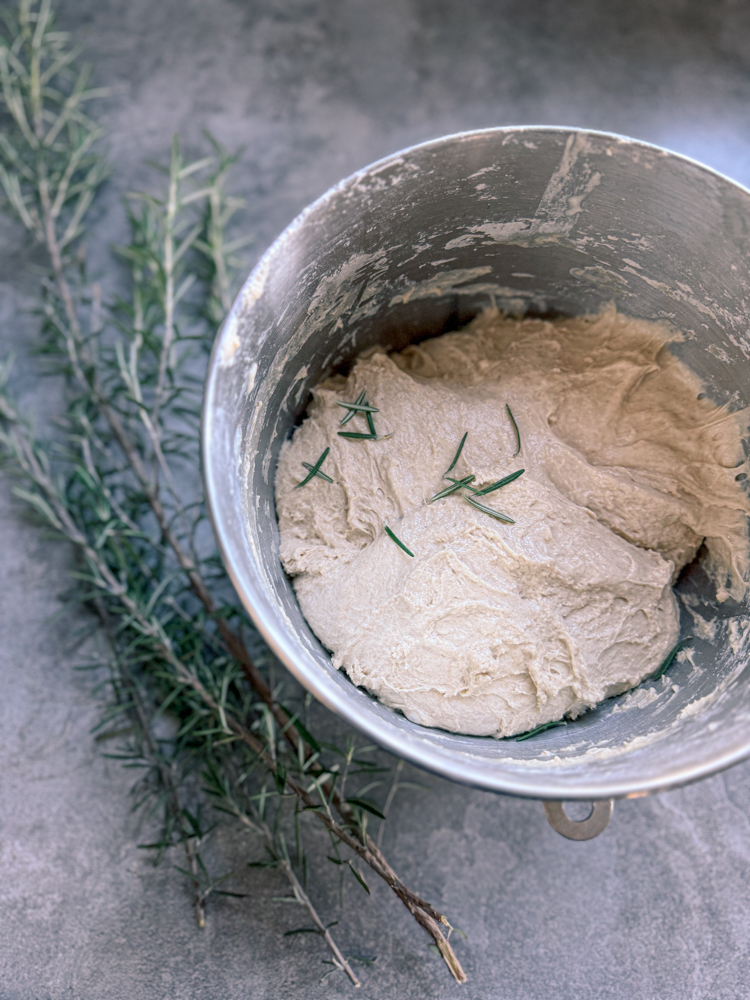
Here’s the big picture of what to expect:
- You’ll mix your flours, water, salt, and active sourdough starter until a shaggy dough forms.
- After a short rest and stretch and fold session, you’ll add chopped rosemary, and shaved parmesan.
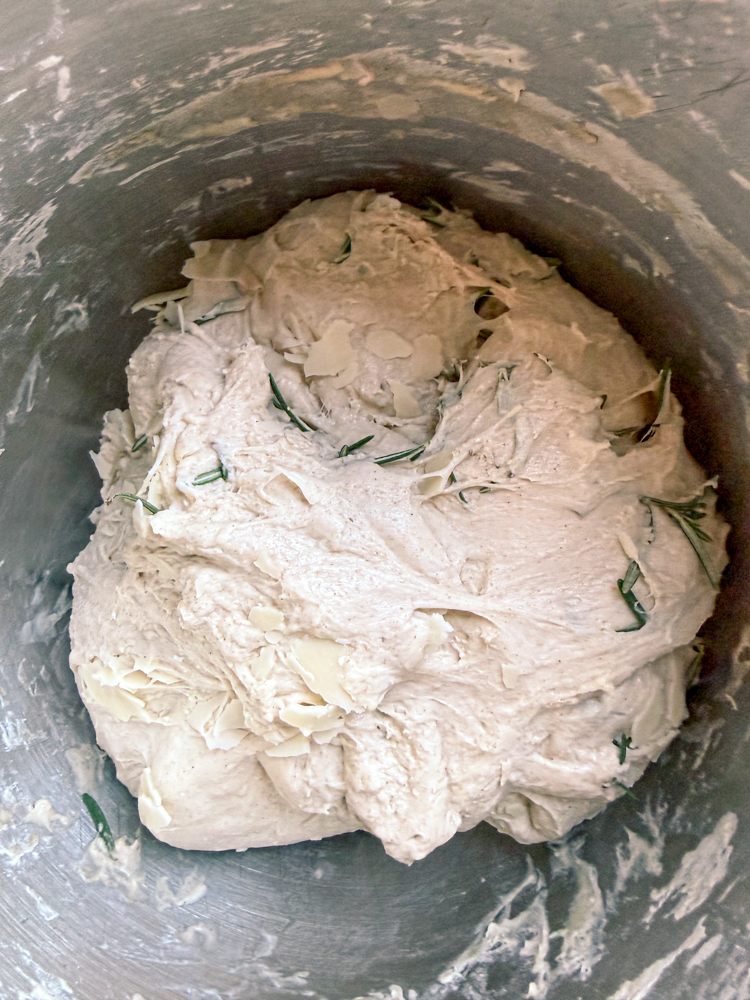
- The dough will go through a series of gentle stretch-and-folds to build structure and thoroughly incorporate the inclusions.
- It will bulk ferment until light, airy, and beautifully risen.
- After shaping, it will cold-ferment in the fridge overnight for flavor and texture.
- The next day, you’ll bake it in a hot Dutch oven for that signature sourdough crust.
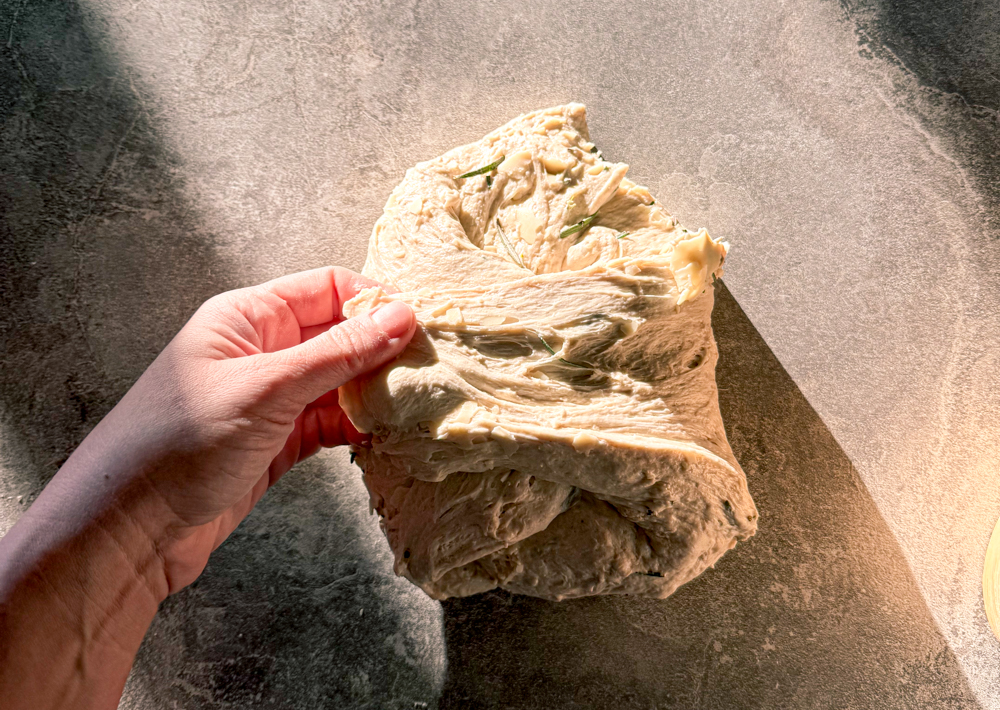
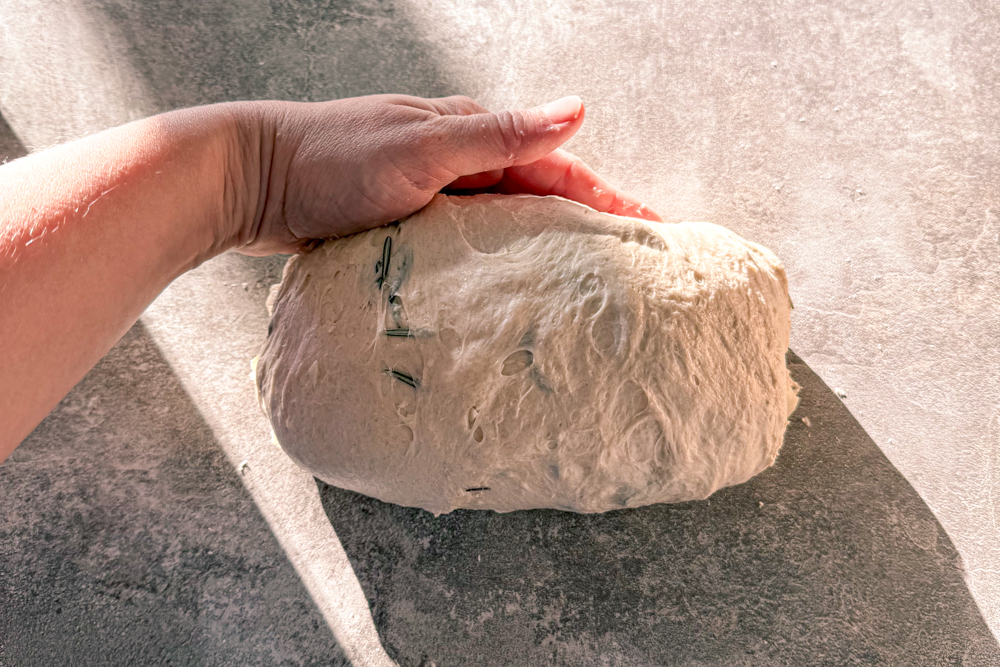
Find the full instructions in the recipe card below!
Tips for working with cheese and herbs in sourdough
When you add ingredients like rosemary and parmesan to sourdough, there are a few things to keep in mind.
Use freshly grated or shaved parmesan. Pre-shredded cheese doesn’t melt the same way and can interfere with fermentation.
Chop the rosemary finely. Big pieces can tear the dough and create uneven pockets. Chopping it finely gives the entire loaf a more pronounced rosemary flavor.
Add mix-ins after the dough has rested. This keeps the gluten from breaking down and helps the bread rise properly.
How to serve rosemary parmesan sourdough bread
Looking for serving suggestions? Know that this is not your typical “bread on the side” bread.
This loaf shines when you serve it with:
- Creamy soups and stews
- Olive oil and balsamic vinegar for dipping
- Soft butter and flaky sea salt
- Scrambled eggs and sautéed veggies
- Charcuterie boards
- Homemade marinara
It also makes incredible grilled cheese and panini sandwiches.
FAQs for rosemary parmesan sourdough bread
Can I make this with dried rosemary?
You can, but fresh rosemary gives the best flavor. If you must use dried, use about one-third the amount since it’s much more concentrated.
Can I use another cheese instead of parmesan?
Yes. Asiago, aged cheddar, or pecorino romano all pair well with fresh rosemary. I do think that parmesan gives the most classic, bakery-style flavor, though.
Is this bread good for beginners?
If you already know how to make basic sourdough, this is a great “next level” loaf. The process is the same — you’re just adding delicious mix-ins. If you’re still pretty new to sourdough and need some encouragement/guidance, I highly recommend you check out my sourdough membership, Honest Sourdough Circle.
Honest Sourdough Circle
Inside Honest Sourdough Circle, you’ll find a simple, supportive way to learn and practice sourdough — with real people in your corner. You’ll receive personalized coaching and access to all of my video tutorials, which are updated and added to regularly. Learn more by clicking below:

Alright, onto the recipe! Be sure to rate it 5 stars if you try it, and love it.
Rosemary Parmesan Sourdough Bread
Print RecipeIngredients
- 100 g sourdough starter bubbly and active
- 250 g all purpose flour
- 250 g bread flour
- 330 g water
- 10 g sea salt
- 10 g chopped fresh rosemary
- 80 g shaved parmesan cheese
Instructions
Mix the Dough
- In a large mixing bowl or the bowl of a stand mixer, combine the all-purpose flour, bread flour, water, sea salt, and active sourdough starter. Use your hands or the dough hook to mix until a shaggy, sticky dough forms.
- Cover and let the dough rest for 20–30 minutes. This short rest allows the flour to fully hydrate and makes the dough easier to work with.
First stretch and fold
- After resting, perform your first set of stretch and folds. With damp hands, grab one side of the dough, gently stretch it upward, and fold it over itself. Turn the bowl a quarter turn and repeat until you’ve gone all the way around.
- Cover and let the dough rest for another 20–30 minutes.
Add the mix-ins
- Sprinkle the chopped fresh rosemary and shaved parmesan evenly over the top of the dough.
- Using wet hands, gently fold the dough over itself and perform another set of stretch-and-folds to start incorporating the mix-ins. Don’t worry if it looks messy at first — it will come together over the next few folds.
- Cover and rest for another 20–30 minutes.
Continue stretch and folds
- Perform 3–4 more sets of stretch and folds spaced 20–30 minutes apart, until the dough passes the windowpane test. Each round will strengthen the dough and evenly distribute the rosemary and parmesan throughout the loaf. By the final fold, the dough should feel smoother, more elastic, and slightly puffed.
Bulk ferment
- Cover the dough and let it bulk ferment at room temperature until it looks light, airy, and about 50–70% larger in volume. Depending on the temperature of your kitchen and the strength of your starter, this should take anywhere from 4-8 hours.
Shape the loaf
- Shape the dough into a tight round or oval depending on your proofing basket. Create surface tension by pulling the dough toward you and tucking the edges underneath.
- Place the shaped dough seam-side up into a floured banneton or towel-lined bowl.
Cold ferment
- Cover and place the dough in the refrigerator for 8–24 hours. This slow fermentation develops deeper sourdough flavor and improves the texture of the crust and crumb.
Bake the bread
- Place a dutch oven with its lid inside your oven and preheat to 450°F for at least 30–45 minutes.
- Turn the chilled dough out onto parchment paper and score the top with a sharp blade.
- Carefully transfer the dough into the hot dutch oven, cover with the lid, and bake for 30-35 minutes.
- Remove the lid and continue baking for another 10-15 minutes until the crust is golden and crisp.
Cool before slicing
- Remove the bread from the Dutch oven and let it cool for at least an hour before slicing. I know it’s tempting to cut into it right away, but this allows the crumb to set and keeps the loaf from becoming gummy inside. Enjoy!



Thanks for stopping by, friends! Don’t forget to leave a comment and rate this recipe if you try it!
Reading your recipe, it seems you didn’t put the starter amount. How much did you use? thanks!
you are right, I completely forgot to put the starter amount in there! so sorry, it’s fixed now!