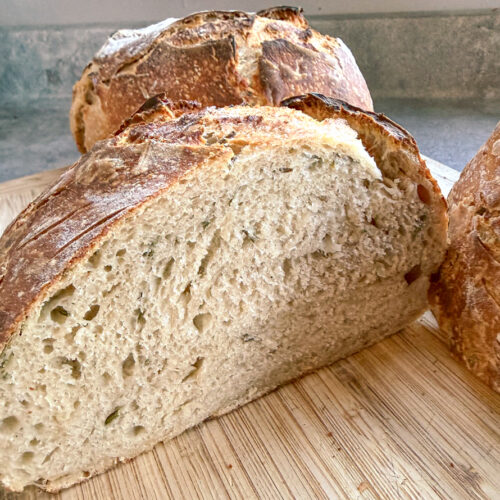
Rosemary Parmesan Sourdough Bread
Print RecipeIngredients
- 100 g sourdough starter bubbly and active
- 250 g all purpose flour
- 250 g bread flour
- 330 g water
- 10 g sea salt
- 10 g chopped fresh rosemary
- 80 g shaved parmesan cheese
Instructions
Mix the Dough
- In a large mixing bowl or the bowl of a stand mixer, combine the all-purpose flour, bread flour, water, sea salt, and active sourdough starter. Use your hands or the dough hook to mix until a shaggy, sticky dough forms.
- Cover and let the dough rest for 20–30 minutes. This short rest allows the flour to fully hydrate and makes the dough easier to work with.
First stretch and fold
- After resting, perform your first set of stretch and folds. With damp hands, grab one side of the dough, gently stretch it upward, and fold it over itself. Turn the bowl a quarter turn and repeat until you’ve gone all the way around.
- Cover and let the dough rest for another 20–30 minutes.
Add the mix-ins
- Sprinkle the chopped fresh rosemary and shaved parmesan evenly over the top of the dough.
- Using wet hands, gently fold the dough over itself and perform another set of stretch-and-folds to start incorporating the mix-ins. Don’t worry if it looks messy at first — it will come together over the next few folds.
- Cover and rest for another 20–30 minutes.
Continue stretch and folds
- Perform 3–4 more sets of stretch and folds spaced 20–30 minutes apart, until the dough passes the windowpane test. Each round will strengthen the dough and evenly distribute the rosemary and parmesan throughout the loaf. By the final fold, the dough should feel smoother, more elastic, and slightly puffed.
Bulk ferment
- Cover the dough and let it bulk ferment at room temperature until it looks light, airy, and about 50–70% larger in volume. Depending on the temperature of your kitchen and the strength of your starter, this should take anywhere from 4-8 hours.
Shape the loaf
- Shape the dough into a tight round or oval depending on your proofing basket. Create surface tension by pulling the dough toward you and tucking the edges underneath.
- Place the shaped dough seam-side up into a floured banneton or towel-lined bowl.
Cold ferment
- Cover and place the dough in the refrigerator for 8–24 hours. This slow fermentation develops deeper sourdough flavor and improves the texture of the crust and crumb.
Bake the bread
- Place a dutch oven with its lid inside your oven and preheat to 450°F for at least 30–45 minutes.
- Turn the chilled dough out onto parchment paper and score the top with a sharp blade.
- Carefully transfer the dough into the hot dutch oven, cover with the lid, and bake for 30-35 minutes.
- Remove the lid and continue baking for another 10-15 minutes until the crust is golden and crisp.
Cool before slicing
- Remove the bread from the Dutch oven and let it cool for at least an hour before slicing. I know it’s tempting to cut into it right away, but this allows the crumb to set and keeps the loaf from becoming gummy inside. Enjoy!